Project Overview
Developing a campaign into a digital destination
When the USS Cleveland returned to its namesake city for commissioning, the USS Cleveland Legacy Foundation needed more than an event page. They needed a destination that could support months of marketing, answer thousands of questions, and bring the community together around a groundbreaking event for the city.
I led the UX, visual design, and Webflow development, creating a landing page that grew alongside the campaign and became the central hub for every digital and physical touchpoint.
Content Strategy
Turning requirements into a clear experience
Event logistics, schedules, FAQs, partners, maps, merchandise, donations, volunteering, newsletter signup — all competing for the same page.
My job was to organize those priorities into one experience that felt informative without becoming overwhelming — structured around the questions visitors were most likely asking, and the actions they were most likely to take.
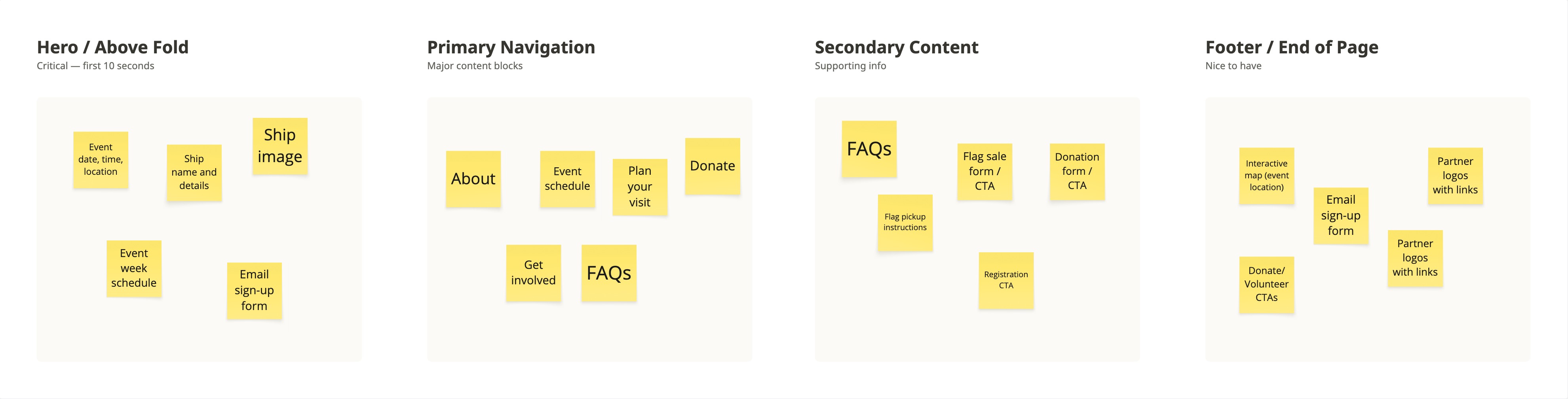
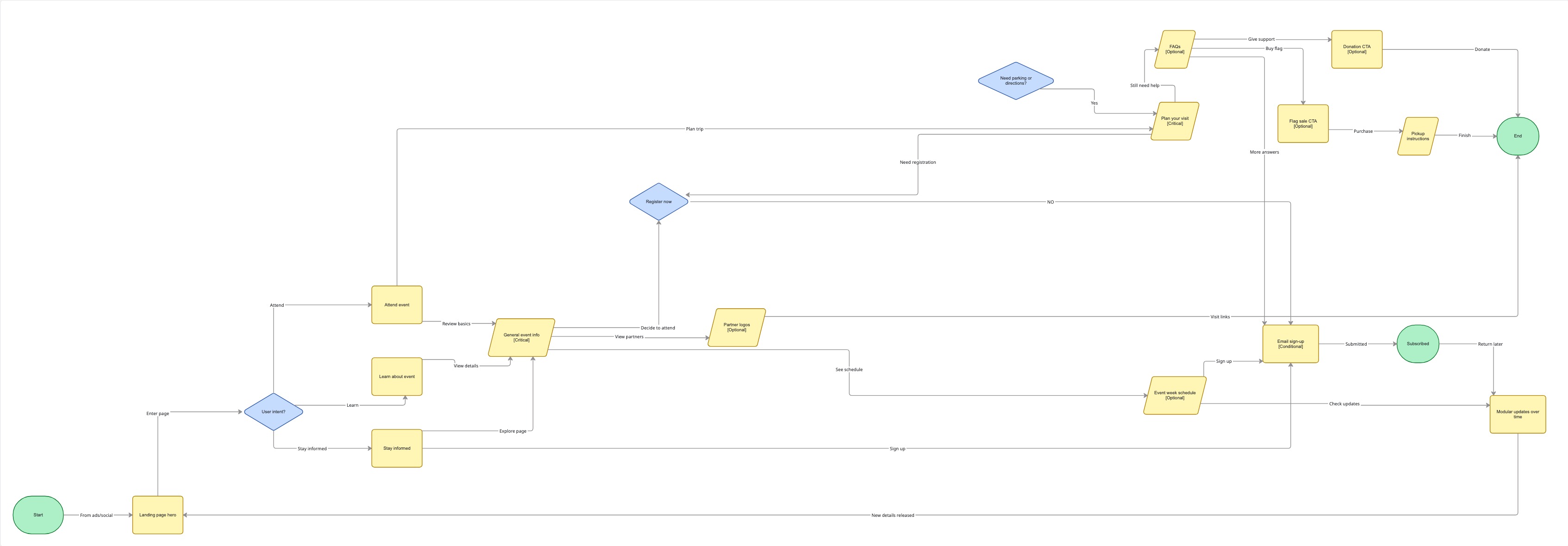
Most people visiting the site would arrive from advertisements or social posts with one of several goals: learn what the event is, why it matters, figure out how to attend, stay informed as new details became available, and get involved or donate.
Design Process
From concept to final design
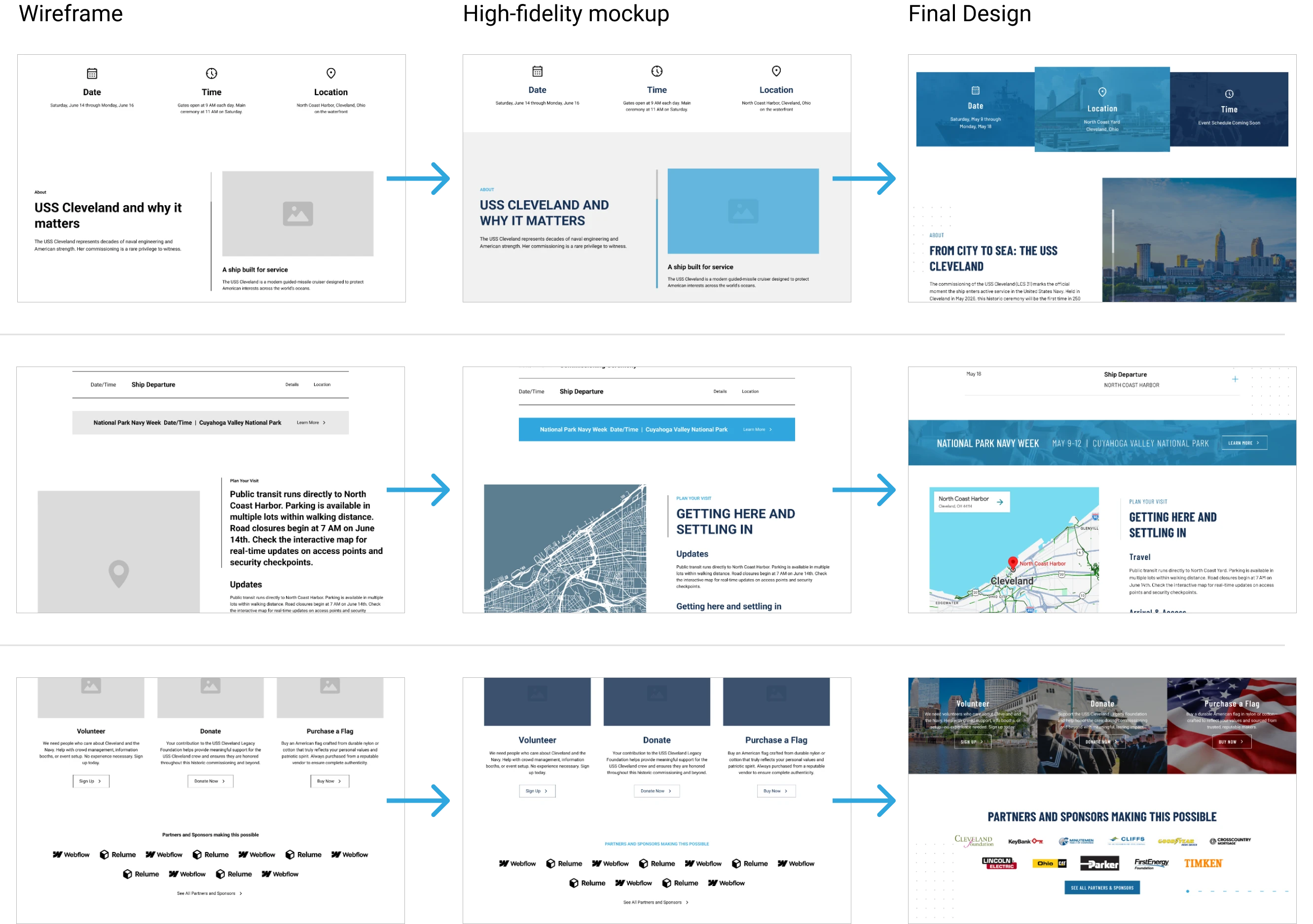
Sketches first, then low-fidelity wireframes in Relume, then Figma — visual design only came once the structure was right.
This stage focused on refining hierarchy, flow, and page structure so the experience was intuitive before layering in typography, color, and imagery. The final system was built in Webflow as a responsive, component-based experience that could adapt as new content arrived.
Visual Design
Shaping the campaign beyond print
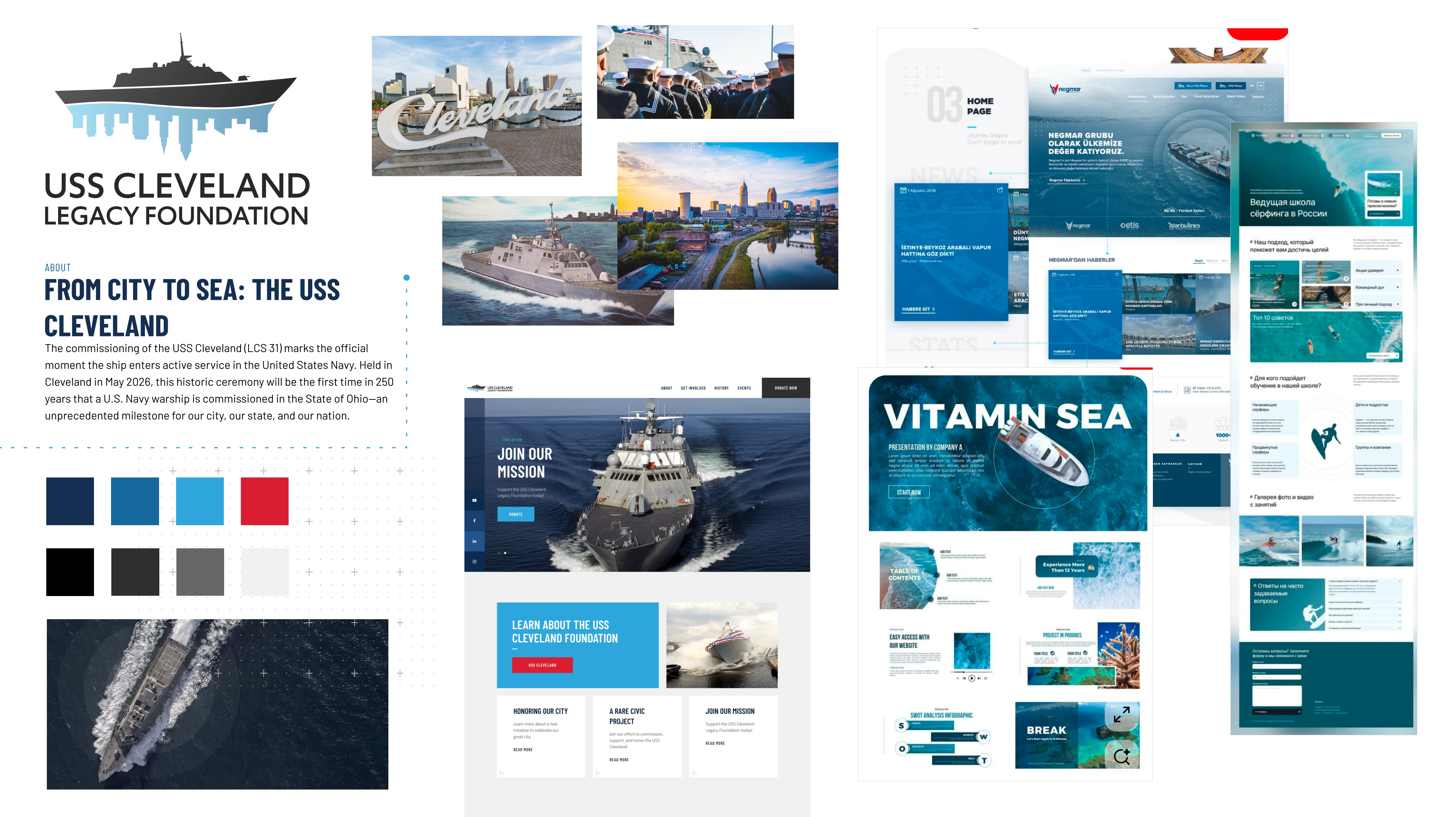
Starting from the Foundation's existing identity, I built a moodboard of photography, brand color, and new visual elements — establishing a direction the marketing team then extended across print, signage, and advertising. As the first piece of the campaign produced, the website set the creative tone: modern interface design balanced with the Foundation's patriotic branding.
Designing for Growth
Planning for a two-phased launch
The site launched months before commissioning day, so it had to evolve without disruption — new sections and calls to action introduced, existing modules repurposed, as details became available.
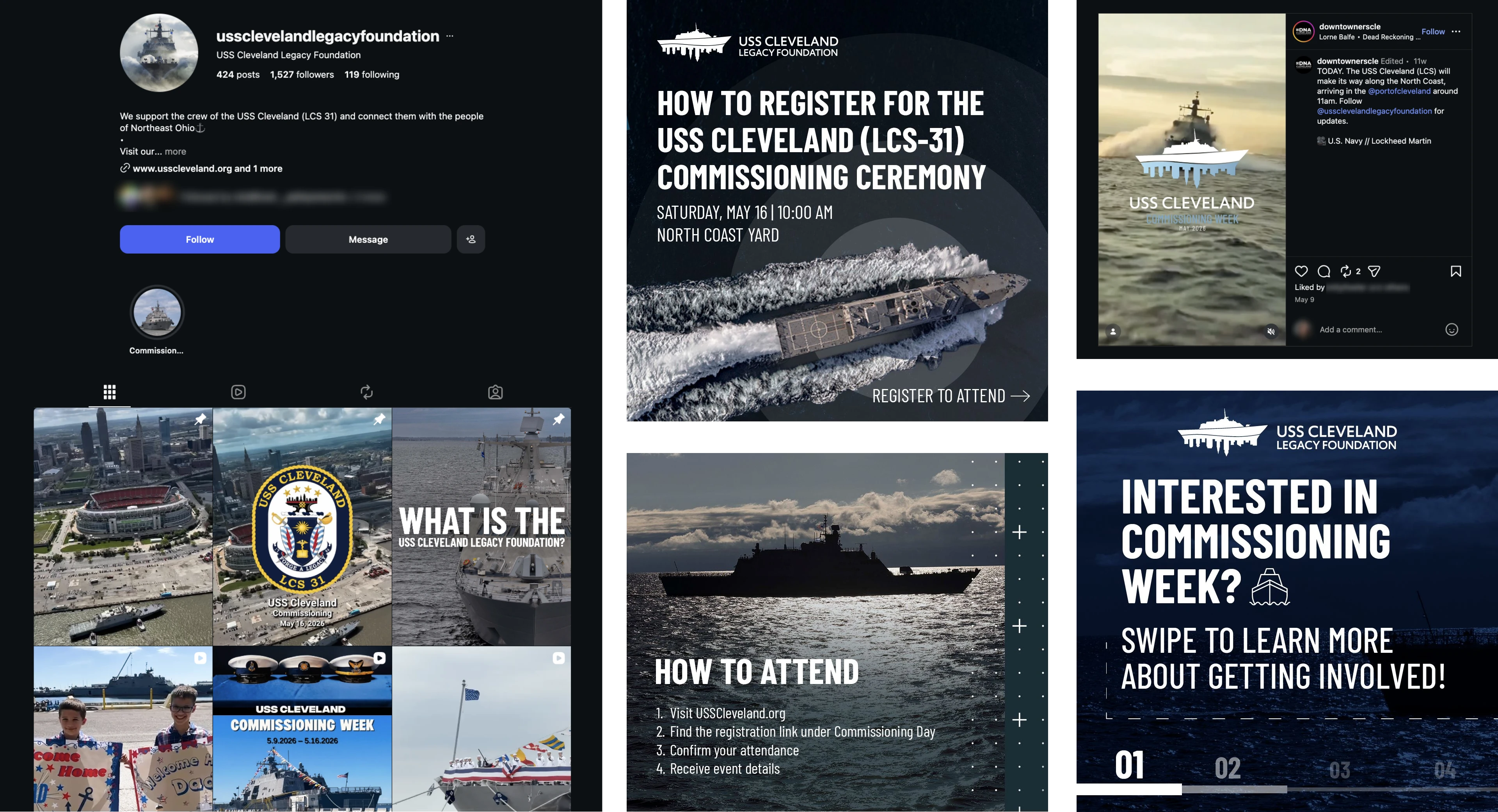
It became the hub for traffic from paid ads, email, social, print, and QR codes — one consistent experience regardless of where a visitor entered.
Design to Delivery
Carrying the design through implementation
I carried the project from Figma through Webflow, building and maintaining the site while collaborating closely with marketing and production teams, presenting directly to the client, and continuously refining the experience as campaign details evolved. The result was a flexible website that delivered consistent messaging no matter where visitors entered the journey.
Designing for Growth
Planning for a two-phased launch
The website successfully evolved from an informational landing page into the primary destination for commissioning updates, event logistics, and community engagement.
Within the first two weeks, the campaign generated nearly 3,000 email signups, while the commissioning weekend welcomed more than 15,000 attendees, demonstrating the site's effectiveness as both a campaign hub and public resource.