Project Overview
Turning a radio spot into something people could play
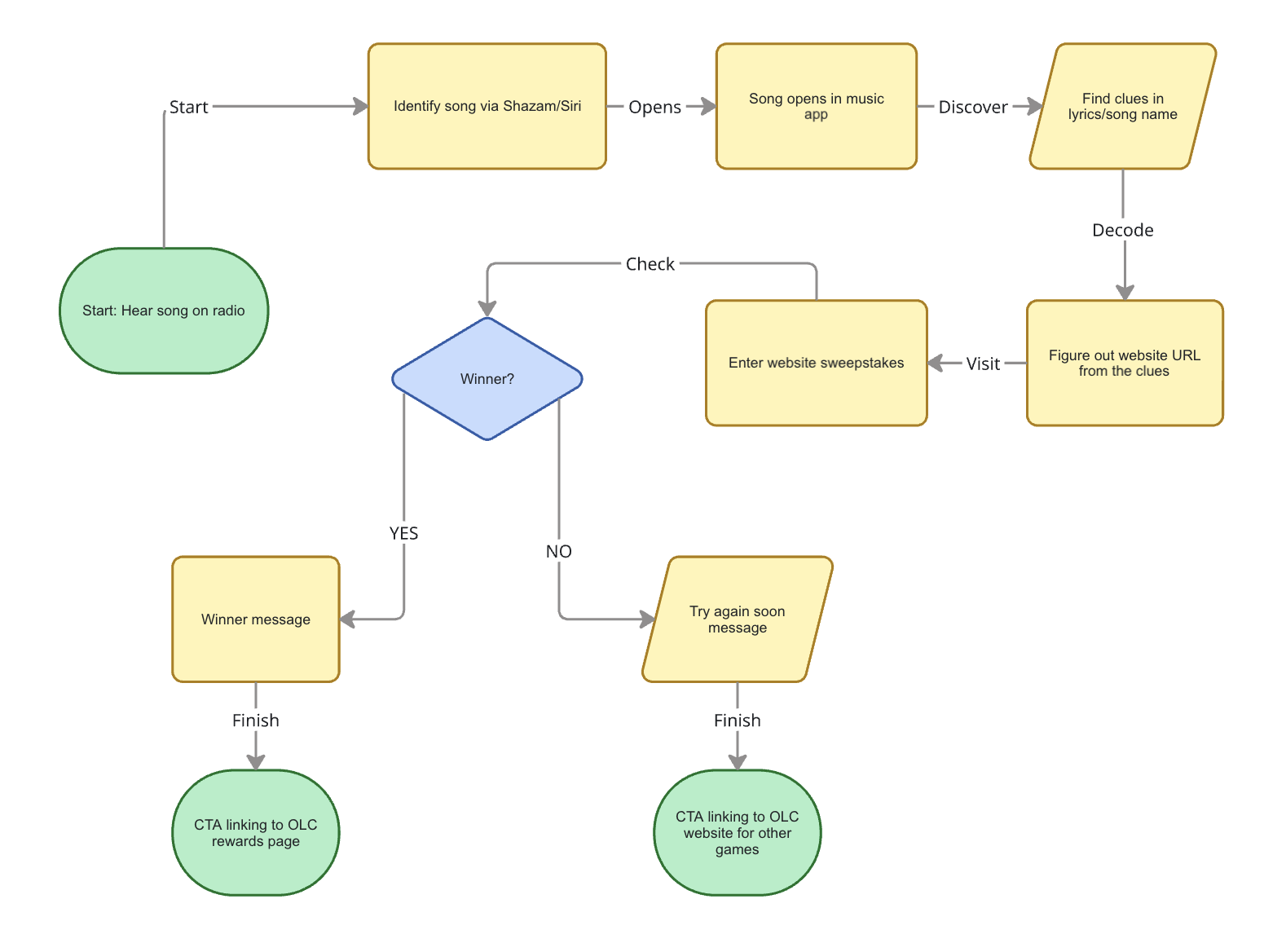
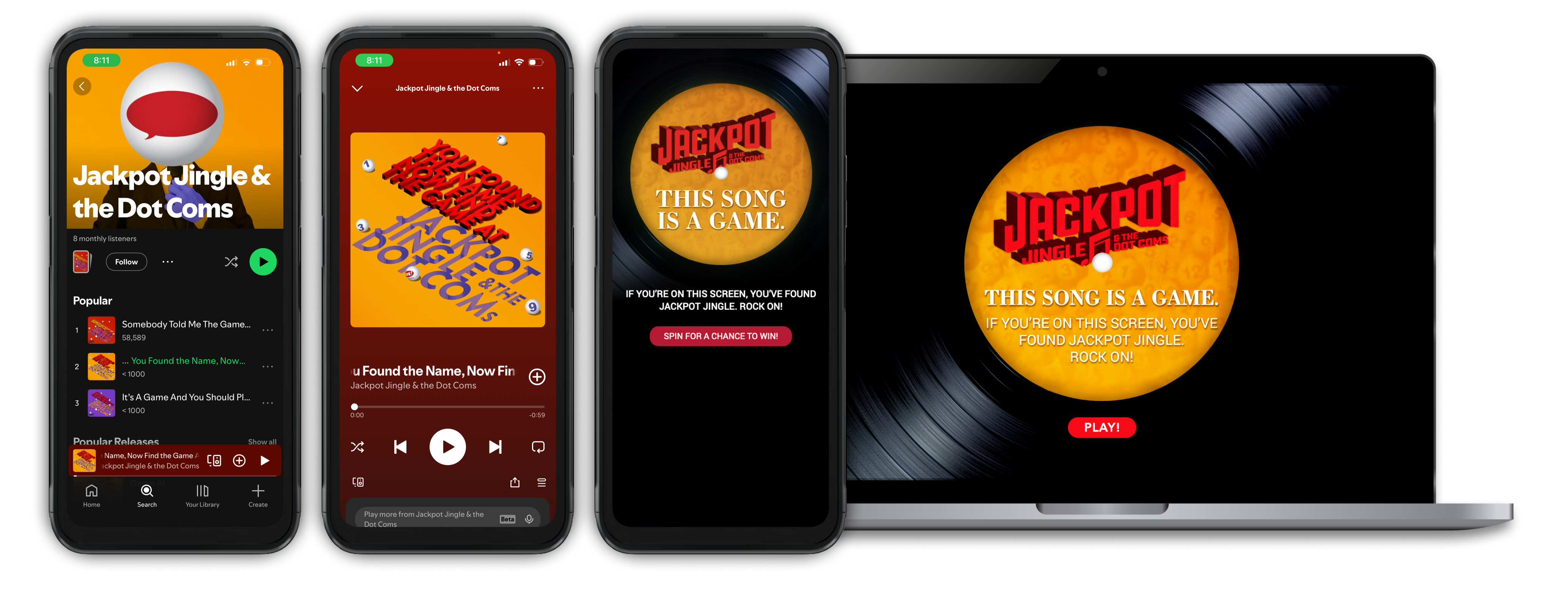
A 60-second song hid a clue in its lyrics — sending listeners from the radio to Shazam, to a music platform, to a digital experience.
By the time anyone reached the landing page, they'd already identified the song, found it on a streaming platform, and solved the clue. I worked with the team in early planning to map those touchpoints, so each interaction naturally led to the next and the whole thing felt like one continuous journey — not a pile of disconnected platforms.
User Experience
Picking up where the song left off
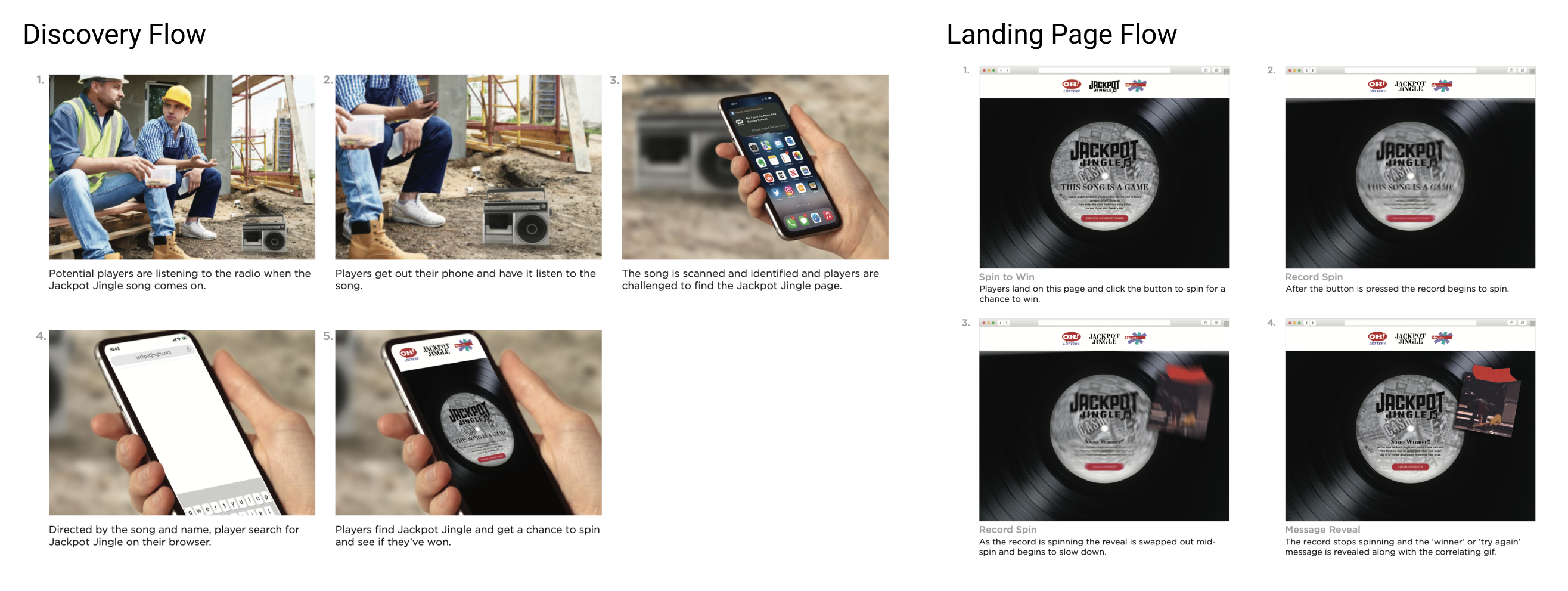
By the time users reached the site, they were already participating — the interface had to make the next step obvious without slowing them down. I translated the campaign's larger journey into a focused digital moment: recognize the clue, understand the opportunity, enter to win. Kept intentionally simple, so the site felt like a continuation of the game rather than a new destination.
Interaction Design
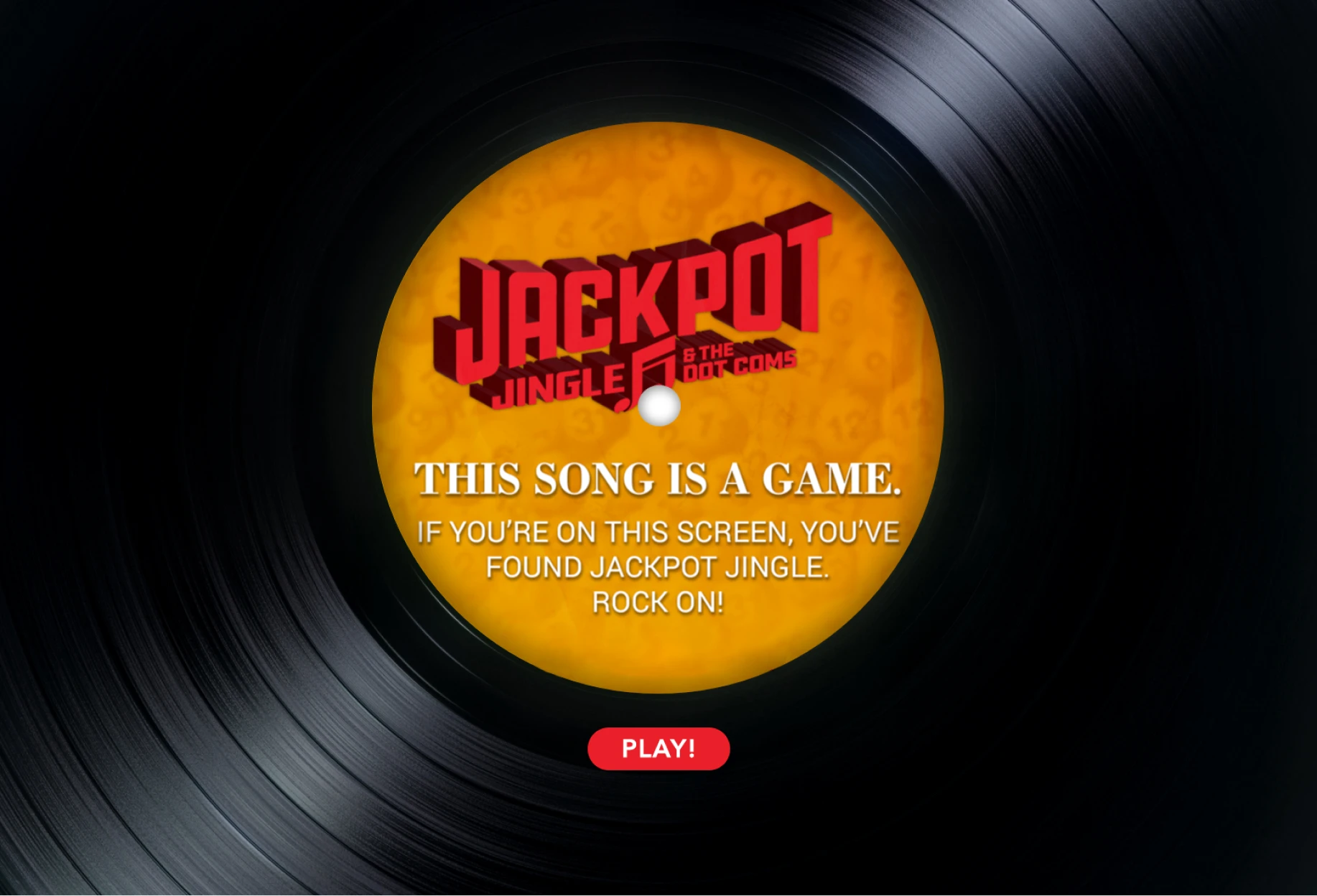
Finding the interaction: the spinning record
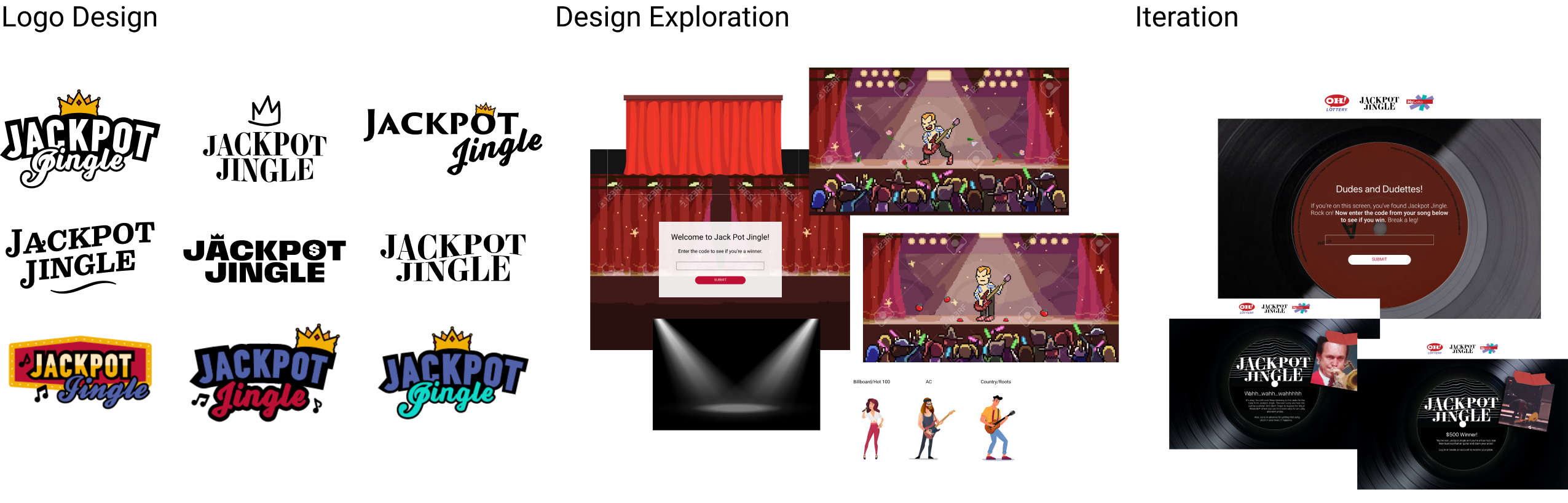
I collaborated on the campaign's visual identity across web and supporting materials — logo concepts, cover art, graphic assets — before landing on a spinning record player as both the functional interaction and the visual signature. Users started the record themselves, building a moment of anticipation as it began to spin, while nodding to the analog ritual of listening to vinyl — a fitting reference for a radio-first campaign.
Design Process
From wireframe to final interface
Structure before style — wireframes established hierarchy and interaction before Sketch introduced any visual direction.
Working through multiple iterations let me test how identity, interaction, and content could come together without ever getting in the way of the experience itself. The landing page was one part of a much larger creative system — I stayed involved from early planning through concept development, user flow, wireframing, UI, and supporting campaign assets.
Outcome
Did people actually play?
The goal wasn't just to get people to hear the song — it was to get them to interact with it. Over two weeks, 6.4 million Ohioans tuned in to hear the song, generating more than 20,000 song identifications, 7,000+ landing page visits, and 24,700+ button clicks. The experience achieved a 67% engagement rate, well above the 40% industry benchmark, while also reaching a new audience: 1 in 5 participants were new lottery players, and half of all players were millennials.
By connecting a familiar medium with the behaviors people already use on their phones, the campaign created a new way for The Ohio Lottery to engage its audience. The work went on to receive recognition from the Radio Mercury Awards, The Reggies, and the AAF Addy Awards, including a National Gold.